
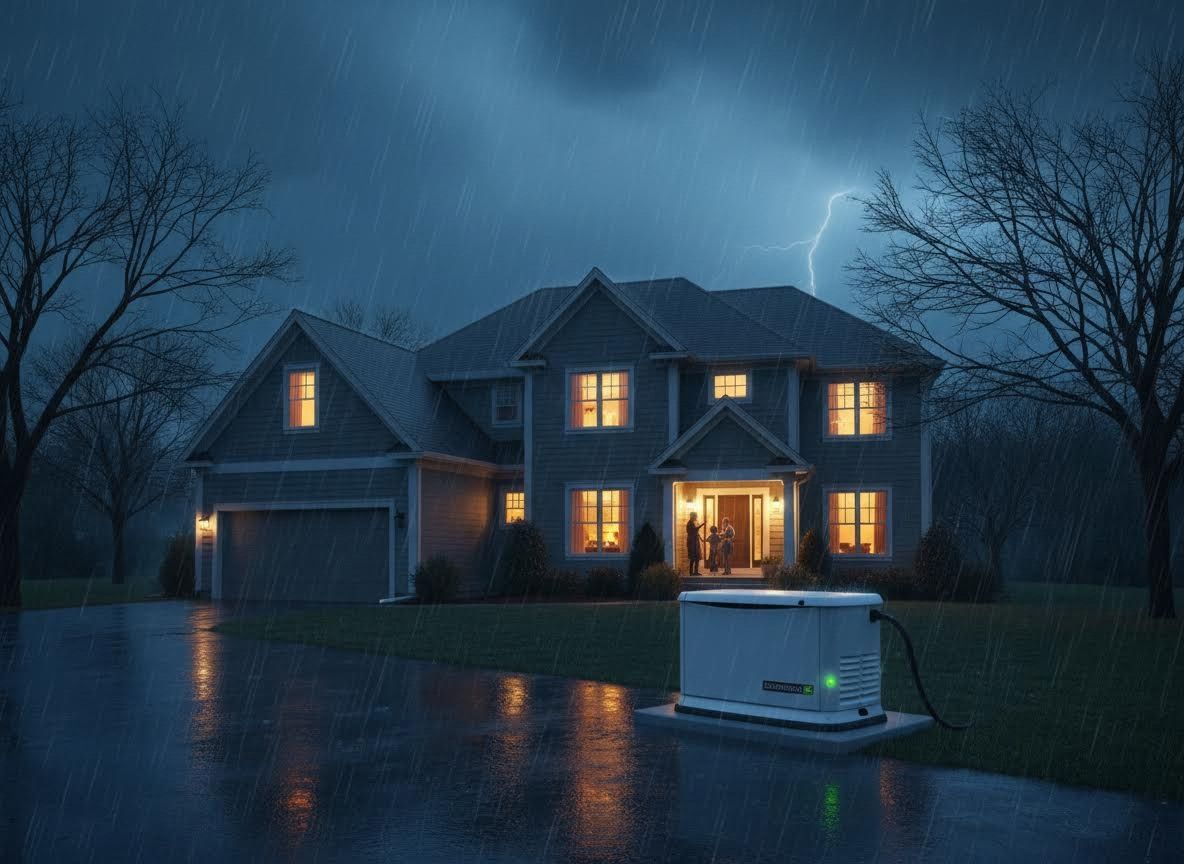
If you live in Washington, CT, you know that our New England weather can be unpredictable. From heavy winter Nor’easters to intense summer thunderstorms, power outages are an unfortunate reality for homeowners in Litchfield County. When the grid goes down, a standby generator is your best defense to keep your home safe, warm, and fully operational.
But a common question we hear at Gadzik Electric LLC is: "What size generator do I actually need?"
Choosing the right size standby generator isn't a one-size-fits-all process. Buying one that is too small means it will overload and shut down when you need it most. Buying one that is too large means you are spending unnecessary money on the unit and the fuel to run it. Here is a guide to help you determine the perfect generator size for your Washington property.
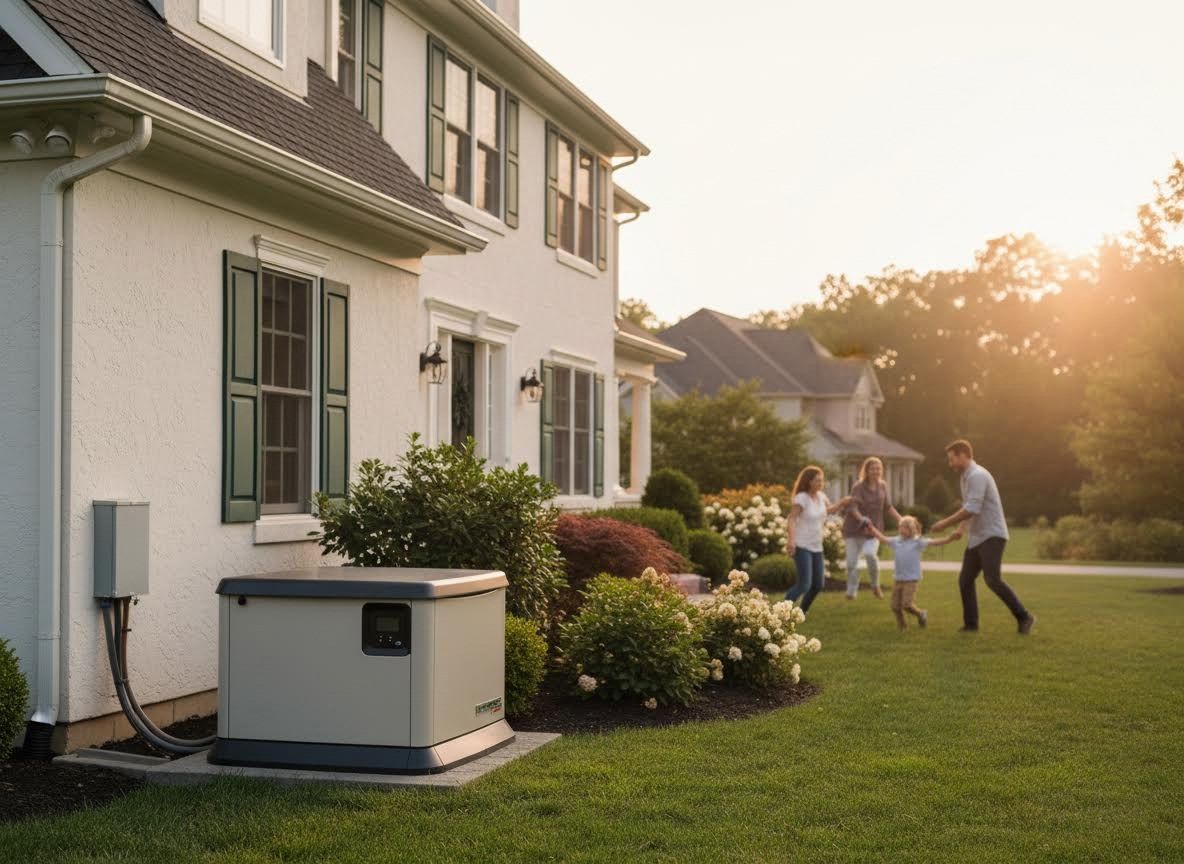
Decide What You Want to Power (Essential vs. Whole-House)
The first step in sizing your generator is deciding what you absolutely need to keep running during an outage. There are generally two routes you can take:
Essential Load (Partial House): This setup powers only your most critical circuits. For most Washington homeowners, this includes the refrigerator, well pump, a few lights, the furnace or boiler, and perhaps a dedicated outlet for medical equipment or charging phones. A smaller generator (typically 9kW to 14kW) can usually handle these essentials.
Whole-House Load: If you want life to continue exactly as normal—with the central air conditioning running, all lights functioning, the electric oven on, and the hot tub bubbling—you will need a whole-house generator. Depending on the square footage of your estate, this usually requires a larger unit ranging from 20kW to 26kW, or even higher for luxury properties.
Understand Starting Watts vs. Running Watts
When looking at appliances, you have to factor in two different types of power requirements.
Running Watts is the continuous power an appliance needs to operate.
Starting Watts (Surge Watts) is the extra burst of energy an appliance needs for a few seconds just to turn on.
For example, your central air conditioning unit might only need 3,000 watts to run, but it could require 9,000 watts just to start up. If your generator cannot handle that initial surge, the AC will not turn on, and the generator may trip. A professional electrician will calculate the total starting watts of your largest appliances to ensure your generator never gets overwhelmed.
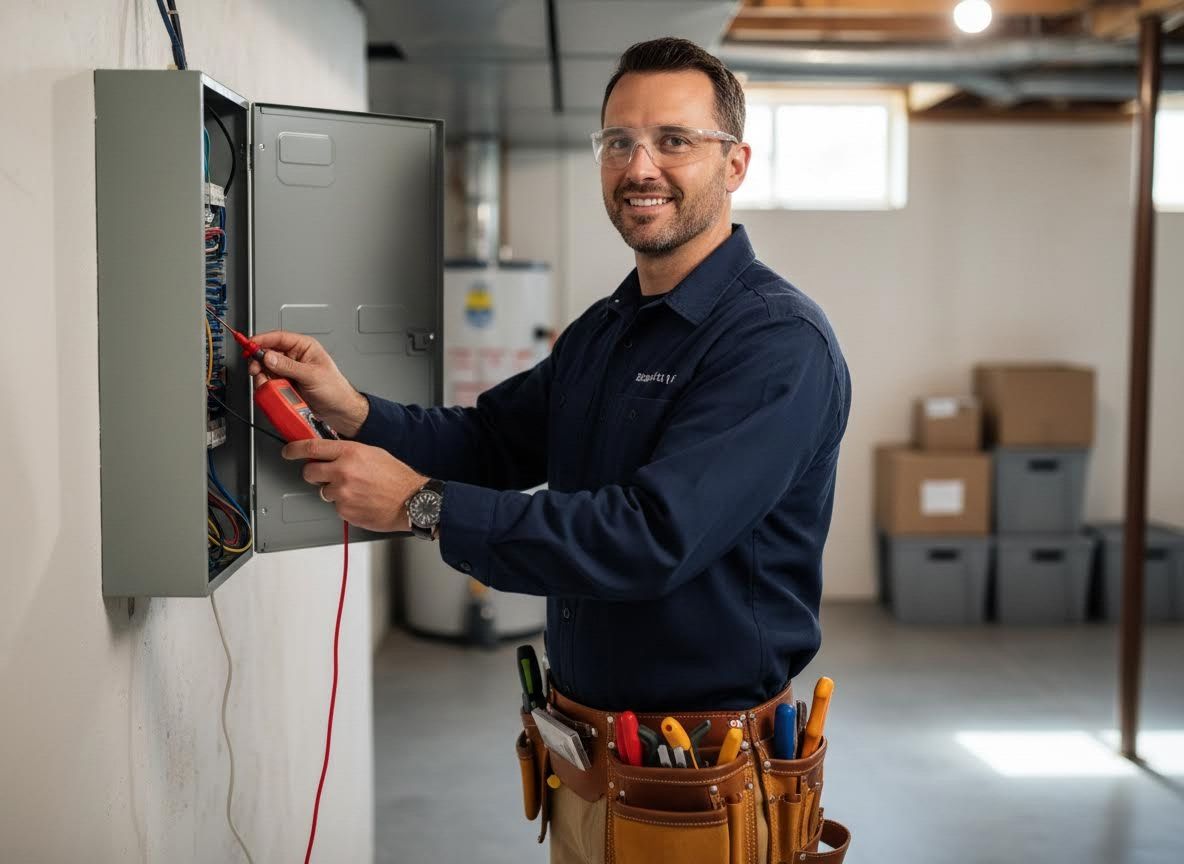
Why Professional Sizing and Installation is Crucial
While there are online calculators that can give you a rough estimate, you should never purchase a standby generator without a professional assessment. Every home's electrical panel is wired differently. Furthermore, Connecticut has specific electrical and building codes regarding how close a generator can be placed to windows, doors, and property lines.
At Gadzik Electric LLC, our licensed electricians will visit your Washington property, perform a thorough load calculation on your electrical panel, and recommend the exact kilowatt size necessary to meet your family's needs safely and efficiently. We also handle the complex wiring of the automatic transfer switch, which ensures your generator turns on seamlessly the moment the utility grid fails.
Ready to Protect Your Washington Home?
Don't wait until the next big storm is in the forecast to start thinking about backup power. If you are considering a standby generator for your home, contact Gadzik Electric LLC today. We proudly serve Washington, New Milford, Kent, and the surrounding areas, providing expert installation and peace of mind.